
The Indonesian Language Defines Time by Sunlight
September 15, 2026
In many languages, there are distinct terms for the time before noon (such as a.m. in English) and the time after noon (p.m.). Similar distinctions exist in Japanese (午前 and 午後) or Chinese (上午 and 下午). However, in Indonesian, the closest equivalent for the hours before noon is pagi (morning), while the middle of the day is often represented by siang (roughly translated as midday or afternoon, though it is not a direct match).
Unlike a.m. and p.m., pagi and siang are not strict chronological markers. For example, 11:00 a.m. is no longer considered pagi, and many Indonesians would not even classify 10:00 a.m. as pagi. Similarly, while 2:00 p.m. is considered siang, 4:00 p.m. is no longer siang—it becomes sore. While these boundaries may seem arbitrary to outsiders, they largely correspond to sunlight intensity and ambient heat rather than fixed clock hours.
Because Indonesia lies entirely within the tropical zone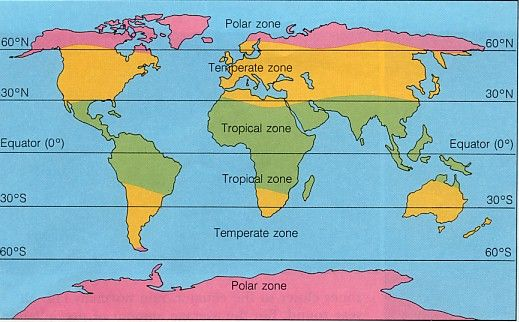 The world's climate regions, daylight hours remain fairly constant throughout the year. This could explain why time-of-day terminology correlates so closely with outdoor temperature and solar position. Pagi refers to the hours before the heat reaches its peak. Siang occurs when the sun is at its hottest, prompting people to seek shade. Sore follows when the sun is still up, but the heat has begun to break. Petang marks the transitional twilight when direct sunlight disappears before true night falls, roughly equivalent to evening or dusk. Finally, malam is simply night.